How Many Grapes Are in a Bottle of Wine?
If you’ve ever wondered how many grapes are in a bottle of wine, the answer is surprisingly simple, and also a little flexible. A standard 750 ml bottle of wine typically contains the juice from about 600 to 800 grapes, which equals roughly 1.5 to 2 pounds (0.7–0.9 kg) of grapes.
That said, there isn’t a single fixed number. Depending on factors like grape variety, cluster size, ripeness, and the pressing method, the total can reasonably range from 500 to 1,000 grapes per bottle in extreme cases. This is why winemakers usually estimate production by grape weight and juice yield, rather than counting individual grapes.
Why the number of grapes varies?
The phrase “how many grapes in a bottle of wine” sounds like it should have a fixed answer, but it changes due to:
- Grape variety (some grapes are tiny, others are large)
- Ripeness & water content
- Juice yield (how much juice you extract per pound)
- Wine style (some wines have more concentration)
- Pressing method (gentle press yields less juice; aggressive yields more)
Most winemaking estimates are calculated by grape weight, juice yield and bottle volume.
How does the number of grapes change in red wine vs white wine?
Yes, slightly, mainly because the winemaking process differs. Red wine ferments with the skins (and often seeds), which means longer contact time and more liquid absorbed by solids during fermentation. That typically reduces yield, so you often need a bit more grape input per bottle, especially for premium reds with lower production yields. Estimated range: 650–900 grapes per bottle in some cases.
White wine, on the other hand, is usually pressed soon after harvest and fermented as clean juice, with less loss from skins and seeds. Because extraction is often more efficient, white wines tend to require slightly fewer grapes per bottle. Estimated range: 550–750 grapes per bottle.
How many grapes are in a glass of wine?
A standard glass of wine is about 150 ml (5 oz), which is roughly one-fifth of a 750 ml bottle. Since most bottles are made from around 600–800 grapes, a typical glass represents approximately 120–160 grapes.
This number can vary slightly depending on the size of the pour and the grape variety, but for most standard servings, 120–160 grapes per glass is the best estimate.
Are wine grapes different from table grapes?
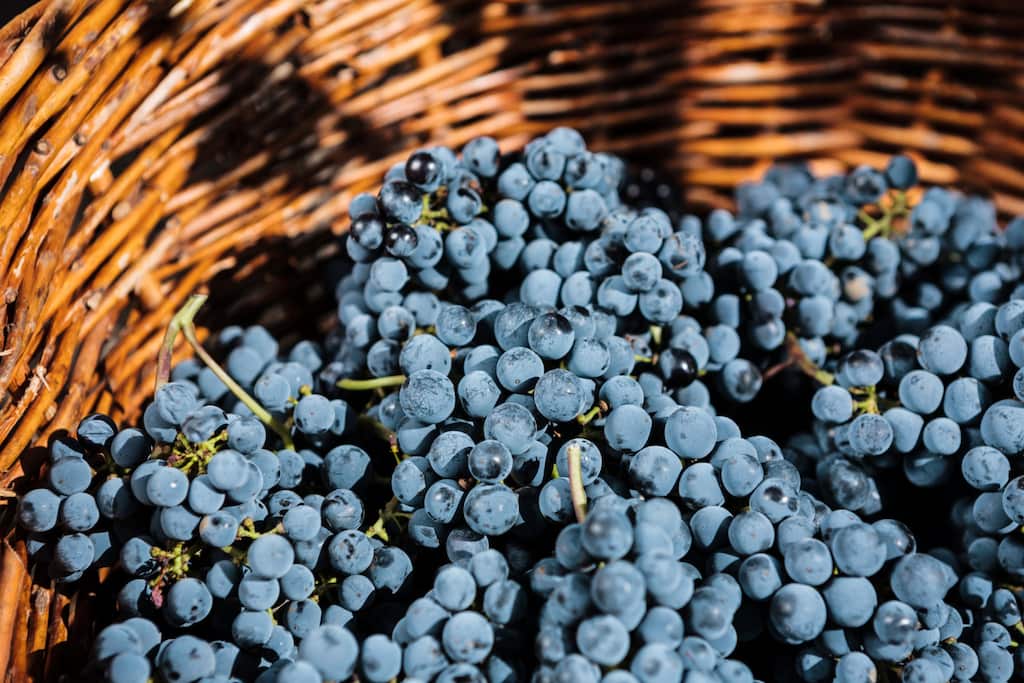
Yes. Wine grapes (Vitis vinifera) are usually smaller, have thicker skins, and contain more sugar and acidity than table grapes. They’re grown for flavor concentration, skin compounds, and fermentation performance, while table grapes are bred for size, sweetness, and texture.
Why do wine grapes have thicker skins?
Because the skin contributes most of the aroma compounds, tannins, and colo, especially in red wines. Thicker skins also help protect the grapes in the vineyard and influence how structured and age-worthy the wine becomes.
Can white wine be made from red grapes?
Yes. Many white wines are made from red grapes by pressing them quickly and separating the juice from the skins before fermentation. This is how sparkling wines like Champagne can be produced from Pinot Noir and Pinot Meunier.
Conclusion
In most cases, a standard 750 ml bottle of wine is made from the juice of around 600–800 grapes, although factors like grape variety, ripeness, and pressing method can push that range from 500 to 1,000 grapes in extreme cases. Red wines often require slightly more grape input due to fermentation with skins and seeds, while white wines tend to be more yield-efficient because they’re pressed earlier.
At Intebrosa, we apply this kind of winemaking knowledge to real-world decisions, from proper storage solutions in a spanish wine cellar, to sourcing premium wholesale wines for hospitality and retailers, and even developing custom pribate label wine projects for brands looking to stand out.