how to launch your own brand with a Spanish producer?
Private label wine is one of the most powerful tools available to importers, distributors, retailers and hospitality groups looking to differentiate their offer, protect their supplier relationships and build long-term brand equity in their market.
And Spain — the world’s largest wine-producing country by vineyard surface area — is one of the best places in the world to source it.
This guide covers everything you need to know about launching a private label wine with a Spanish producer: what it involves, who it is for, and how to get started.
What is private label wine?
Private label wine — also known as own-label wine or OEM wine — is wine produced by a winery and sold under the buyer’s own brand rather than the producer’s brand.
The bottle, label, capsule and packaging carry your name, your logo and your design. The wine inside is produced to your specification by an experienced producer with the infrastructure, certifications and know-how to deliver consistent quality at scale.
For the end consumer, it is simply your wine. The producer remains in the background.
Who uses private label wine?
Private label is not a niche or specialist product. It is used across the wine industry by a wide range of buyers:
Importers and distributors use private label to build a proprietary brand in their market, reducing dependency on third-party brands and improving margin control.
Supermarkets and retail chains use own-label wine to offer competitive price points, build loyalty and differentiate their range from competitors selling the same producer brands.
Restaurants and hotels use private label for their house wine programme — serving wine under their own name without revealing the supplier or the cost price. This is particularly common in the HoReCa sector, where a custom-labelled house wine increases perceived value and supports brand consistency.
Wholesale buyers and cash-and-carry operators use private label to build a recognisable own brand across multiple wine categories, typically at high volume.
Event companies and corporate buyers use private label for branded wine gifts, sponsorship activations and corporate hospitality — where the wine itself becomes a branded touchpoint.
Why source private label wine from Spain?
Spain offers a combination of advantages that few other wine-producing countries can match for private label buyers.
Scale and flexibility. Spain produces over 35 million hectolitres of wine annually across a huge diversity of regions, grapes and styles. Whether you need a light, fresh white for a Nordic market or a full-bodied red for a restaurant programme in Japan, Spanish producers can deliver it.
Value for money. Spanish wine consistently offers quality that punches above its price point. For private label buyers, this means a higher-quality product at a lower cost base — improving your margins without compromising the end consumer’s experience.
Complete customisation. Working with an established Spanish producer means flexibility across every element of the product: wine type and style, bottle shape, label design, capsule colour, case format and packaging. The product is built around your brand, not the other way around.
European origin and certification. Spanish wine carries the credibility of European production, with access to DO (Denominación de Origen) classifications and EU organic certification for buyers who need those credentials in their market.
Export infrastructure. Spain’s wine industry has decades of export experience. Leading producers have the logistics, documentation and regulatory knowledge to ship to markets across Europe, Asia, the Americas and beyond.
What can be customised in a private label wine?
A full private label programme from an experienced Spanish producer covers every element of the finished product:
The wine itself — grape variety, style (dry, semi-sweet, organic), alcohol level, and the flavour profile that matches your market and your customers.
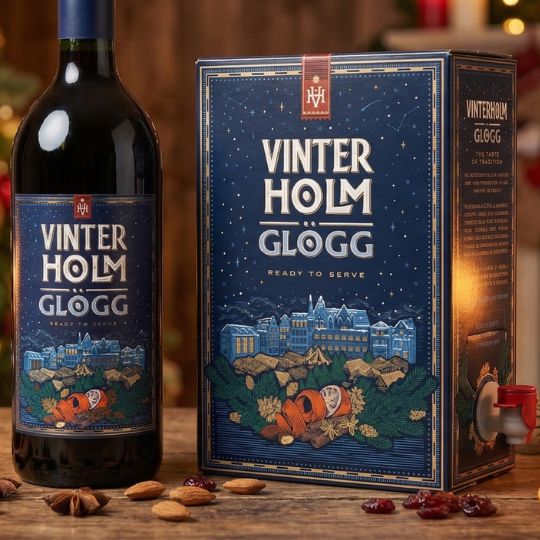
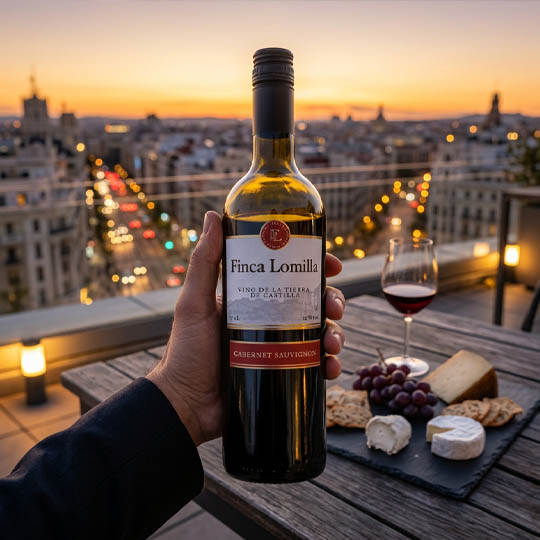
The bottle — shape, size (75cl, 187ml, 1L, 1.5L and others), colour and closure type. We can adapt the bottle to your preference.
The capsule — colour and material to match your brand identity exactly.
The label — your design, your brand name, your artwork. Labels can be adapted for different markets and languages, including compliance with local labelling regulations (ingredients, allergens, recycling symbols, health warnings by country).
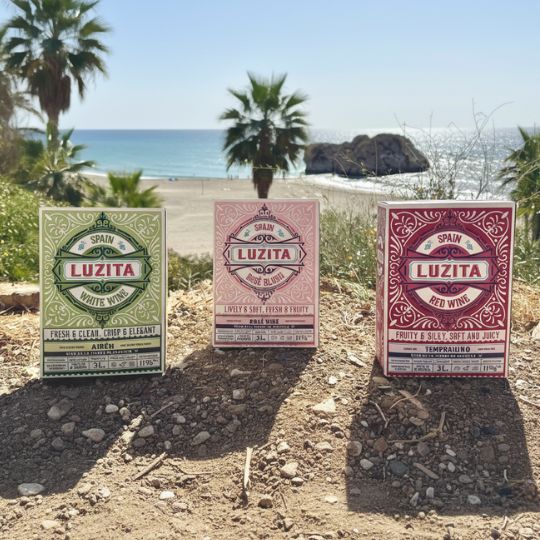
The format — beyond the standard 75cl bottle, private label is also available in bag-in-box formats (3L, 5L, 10L, 20L), which are particularly popular for the HoReCa sector and for markets where BIB has strong consumer acceptance.
Brand design included — at no extra cost
One of the most common barriers for buyers launching a private label wine for the first time is the brand itself: the name, the visual identity, the label design.
At Interbrosa, we have an in-house design team dedicated to creating brands for our private label clients — included as part of the service, at no additional cost.
If you already have a brand or an existing design, we can adapt it to our products. If you are starting from scratch, our team will work with you to develop a label and visual identity that fits your market, your positioning and your customers.
You do not need a design agency, a brief or a budget for this. Just tell us what you have in mind and we will bring it to life.
Minimum order quantities
Private label wine is available from the following minimum quantities:
All minimum quantities apply per SKU — meaning per wine type, variety or format within your range.
Bottled wine (75cl)
| Format | Minimum order per SKU |
|---|---|
| Standard bottles (75cl) | 3,000 bottles (4 pallets) |
Bag-in-box
| Format | Minimum order per SKU |
|---|---|
| 3L BIB | 1,040 units |
| 5L BIB | 576 units |
| 10L BIB | 288 units |
| 20L BIB | 180 units |
For example, if you want to launch a red and a white under your label, each wine counts as a separate SKU and the minimums apply independently to each. This gives you full flexibility to build a multi-product range at your own pace.
How the bag-in-box private label works
The minimum print run for custom BIB packaging is 5,000 units per design. This covers the cost of the printed box at the packaging supplier.
Here is how the process works in practice:
- You commit to 5,000 custom-printed BIB boxes for your design. This is paid upfront.
- Interbrosa holds your printed stock at our facilities.
- Each time you place a BIB order (from the MOQ quantities above), we fill and dispatch from your stock.
- Your print units are drawn down with each order until the stock is consumed.
This model means you benefit from custom branding without needing to order 5,000 filled BIBs at once. You spread your orders over time while your packaging is ready and waiting.
Private label bag-in-box: the anonymous house wine solution
One of the most commercially effective private label formats for restaurants, hotels and bars is the anonymous bag-in-box.
The concept is straightforward: a neutral white box, with no producer branding, and your custom sticker label applied to the outside. The result is a professional house wine that is entirely yours — your name, your design, your brand — with no reference to the producer or the origin price point.
This format is available in 3L, 5L, 10L and 20L, and works across the full range of wine styles: red, white, rosé and organic.
For high-volume HoReCa buyers, the anonymous BIB combines the operational advantages of bag-in-box (no oxidation, six weeks fresh after opening, lower cost per glass) with complete brand ownership. Guests order your house wine, not a producer’s wine.
The private label process: from idea to delivery
1. Brief and selection You tell us about your market, your customers and the style of wine you need. We present options from our portfolio that fit your requirements — with samples for evaluation.
2. Design Our in-house design team creates your label and brand identity — or adapts your existing artwork to our products. We check that the design meets the labelling requirements of your destination market.
3. Customisation We finalise the bottle, capsule, label and packaging to your specification. For BIB products, the print order for your custom packaging is confirmed and placed at this stage.
4. Production and quality control Your wine is produced and packaged under strict quality control. All relevant certifications — organic, DO classification, export documentation — are prepared alongside.
5. Logistics and delivery We coordinate shipment to your warehouse or distribution hub, with full export documentation for your destination market.
Try the Wine Personaliser
Not sure where to start? Use our online Wine Personaliser to explore your options before making any commitment.
The tool guides you through wine type, bottle format, label style and packaging step by step — giving you a visual sense of what your branded wine could look like and helping you build a brief for our team.
Private label wine for every market
Interbrosa’s private label programme is designed for international buyers. We have experience working with partners across Europe, Asia and beyond, adapting labelling and packaging to meet the requirements of different markets — from ingredient declarations for Northern European retailers to language-specific labelling for Asian distributors.
Our portfolio covers the full range of styles relevant to private label buyers: still wines (red, white, rosé), organic wines, Frizzante, Sangria, Glögg and bag-in-box formats across all categories.
Ready to launch your own wine brand?
Get in touch with our team to discuss your project. We will help you select the right wine, design your brand from scratch or adapt your existing artwork, and manage the full process through to delivery — with no extra charge for design.
Interbrosa Family Wines — Spanish wine producers and exporters since 1995. Private label and OEM wine solutions for importers, distributors, retailers and hospitality groups worldwide.